

Clear Aligners vs. Braces in Sri Lanka
How Clear Aligner Treatment Works
Your Step-by-Step Guide in Kandy
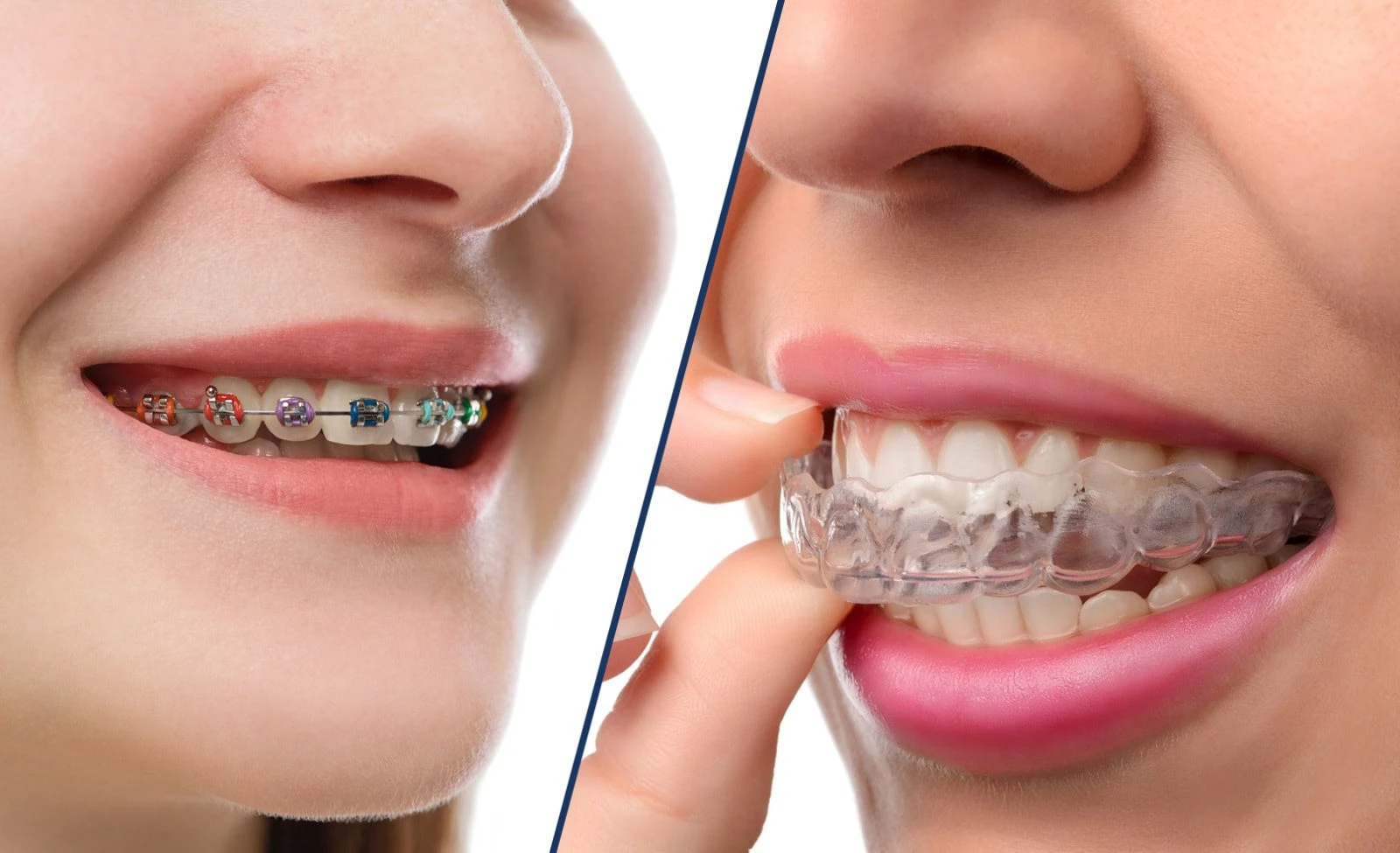
The advent of clear aligners has revolutionized orthodontics as it presents a new technique for straightening teeth without the use of braces that are visible and metallic in nature. Clear aligners are basically a set of invisible trays through which the alignment process is completed.
Many people in Sri Lanka are interested in having clear aligners done, but they are left wondering:
"How does the clear aligner treatment procedure really take place?"
This article aims at providing information about the procedure of clear aligner treatment and this will be done following the treatment procedure at Cayo Dental Hospital.
The Journey to a Straighter Smile at Cayo Dental
In order to ensure proper and precise movement of the teeth, aligner therapy involves a systematic process that is digitally planned.
Aligner therapy relies on digital planning, simulation in the computer, and sophisticated manufacturing technology, as opposed to traditional braces which rely on manual adjustments.
1
Your Initial Consultation and Precision 3D Intraoral Scan
Consultation is the first step in the process of aligner therapy. During this visit, the dentist will perform the following actions:
- Examine your teeth and take a bite.
- Discuss your smile goals.
- Decide whether aligners are suitable for you.
Instead of traditional dental impressions, a 3D intraoral scan will be done in order to provide a digital model of your teeth.
This allows clinicians to analyze bite relationships and teeth positioning with great precision.
2
Designing Your Smile with AI Treatment Planning Software
Once the digital scan is complete, specialized orthodontic software is used to create a customized treatment plan.
With the help of advanced digital simulation, the dentist can view:
- Movement of your teeth during treatment
- How many aligners will be required
- The estimated duration of treatment
Instead of traditional dental impressions, a 3D intraoral scanner is used to capture a detailed digital model of your teeth.
There is greater predictability and planning of tooth movements through this process.
3
Crafting Your Custom Trays with Advanced 3D Printing Resins
The aligner trays are manufactured after the formulation of the treatment plan.
Advanced precision 3D printing technology is often utilized in modern aligners to manufacture the models for manufacturing the aligners.
Each aligner tray is designed to slowly shift the teeth into its perfect position by exerting a specific amount of pressure.
The high-quality clear resin material used for making the trays provides:
- Flexibility
- Comfort
- Durability
4
Fitting Your First Set of Invisible Aligners
The patient returns to the dental office to receive his or her first aligners. During this visit:
- The dentist checks the fit of the aligners
- Small attachments may be placed on certain teeth if needed
- Instructions are provided for wearing and caring for the aligners
Attachments are needed to allow the aligners to exert more precise forces; they are small, tooth-shaped pieces glued to the teeth.
5
Wearing and Progressing Through Your Aligner Series
A series of aligner trays is required during the procedure of clear aligners.
Patients are supposed to:
- Wear each tray for 10–14 days
- Wear aligners 20–22 hours per day
- Remove them only when eating or brushing
Teeth are moved gradually toward their final position using every subsequent tray. Treatment will go on until all the aligners have been used.
How Do Clear Aligners Actually Move Your Teeth?
Many patients are curious about how aligners are able to move teeth without wires.
The Science of Gentle, Continuous Force
The process of bone remodeling occurs during the biological activity of moving the teeth orthodontically.
When the tooth is slowly compressed:
- Bone on one side of the tooth begins to resorb.
- The tooth gradually shifts position.
- New bone forms around the tooth in its new location.
The clear aligner directs the teeth along the path designed within the orthodontic plan by slowly applying controlled pressure.
Such movement ensures predictability and safety of the orthodontic treatment.
Bringing Convenience to You: The Cayo Dental Distance Centers
Modern orthodontic treatment should be accessible even for patients who live far from major cities.
To improve convenience, digital scanning services can be performed through distance centers, allowing patients to begin treatment closer to home.
Remote Registration and Scanning Without the Wait
With the help of distant centers, patients can:
- Complete their digital scan locally
- Register for a distant treatment program
- Reduce unnecessary travel to the main clinic
This approach makes modern orthodontic care more accessible to patients across Sri Lanka.
Tracking Your Progress and Post-Treatment Care
The last aligner does not represent the end of orthodontic treatment.
In the course of treatment, regular monitoring makes sure that teeth move according to the treatment plan.
In some cases, additional aligners are required for further refinement.
Transitioning to Retainers to Lock in Your New Smile
Retainer use is necessary after undergoing treatment via aligners.
Retention helps prevent teeth from relapsing and maintain the new positions of the teeth.
Teeth are likely to revert back to their previous positions without wearing retainers.
Most orthodontists recommend wearing retainers frequently, especially within the first year of treatment.
Getting Started is Easy: Book and Pay Online
Patients can easily embark on their orthodontic treatment path due to modern technology. Online appointment systems will allow patients to:
- Schedule consultations
- Select appointment times.
- Confirm appointments quickly.
Secure Your Appointment Instantly via PayHere Integration
It is easy for patients to check their appointments through secure payment methods such as PayHere.
Patients do not have to wait unnecessarily due to the presence of this technology.
Frequently Asked Questions
Do I need to wear my aligners while sleeping?
It is advisable to use aligners 20-22 hours a day, including at night. Continuous non-use of aligners can negatively affect the process of treatment.
What is the frequency of visits to the clinic in Kandy?
Periodical visits to monitor the progress are required by most aligner treatments. The interval between these visits is six-eight weeks on average.
Is there any pain during treatment?
While changing the tray, it is normal to feel slight pressure or discomfort. It means that teeth move correctly and usually passes within one-two days.
Clinical Data from Cayo Dental
Clinical observations from Cayo Dental Hospital demonstrate predictable outcomes for clear aligner therapy when treatment is properly planned and monitored.
| Clinical Indicator | Observed Value |
|---|---|
| Aligner cases analysed | ~642 patients |
| Average patient age | ~29.8 years |
| Average aligners per arch | ~22 trays |
| Average total aligners per case | ~38 trays |
| Average treatment duration | ~10.6 months |
| Cases requiring refinement aligners | ~54% |
| Treatment completion rate | ~93% |
These observations are consistent with international orthodontic research showing that clear aligners can provide highly effective results for mild to moderate orthodontic corrections when patients maintain proper wear compliance.