

Clear Aligners vs. Braces in Sri Lanka
Clear Aligners vs. Braces in Sri Lanka
Which is Right for You?
Orthodontics has undergone many transformations in recent times. Whereas metal braces have traditionally been the default treatment method to straighten crooked teeth, advancements in technology have made another option available in the form of clear aligners.
If you are an orthodontics patient from Sri Lanka trying to make the right decision between braces and aligners, then here is what you should know about their differences regarding looks, comfort, ease-of-use, and pricing.
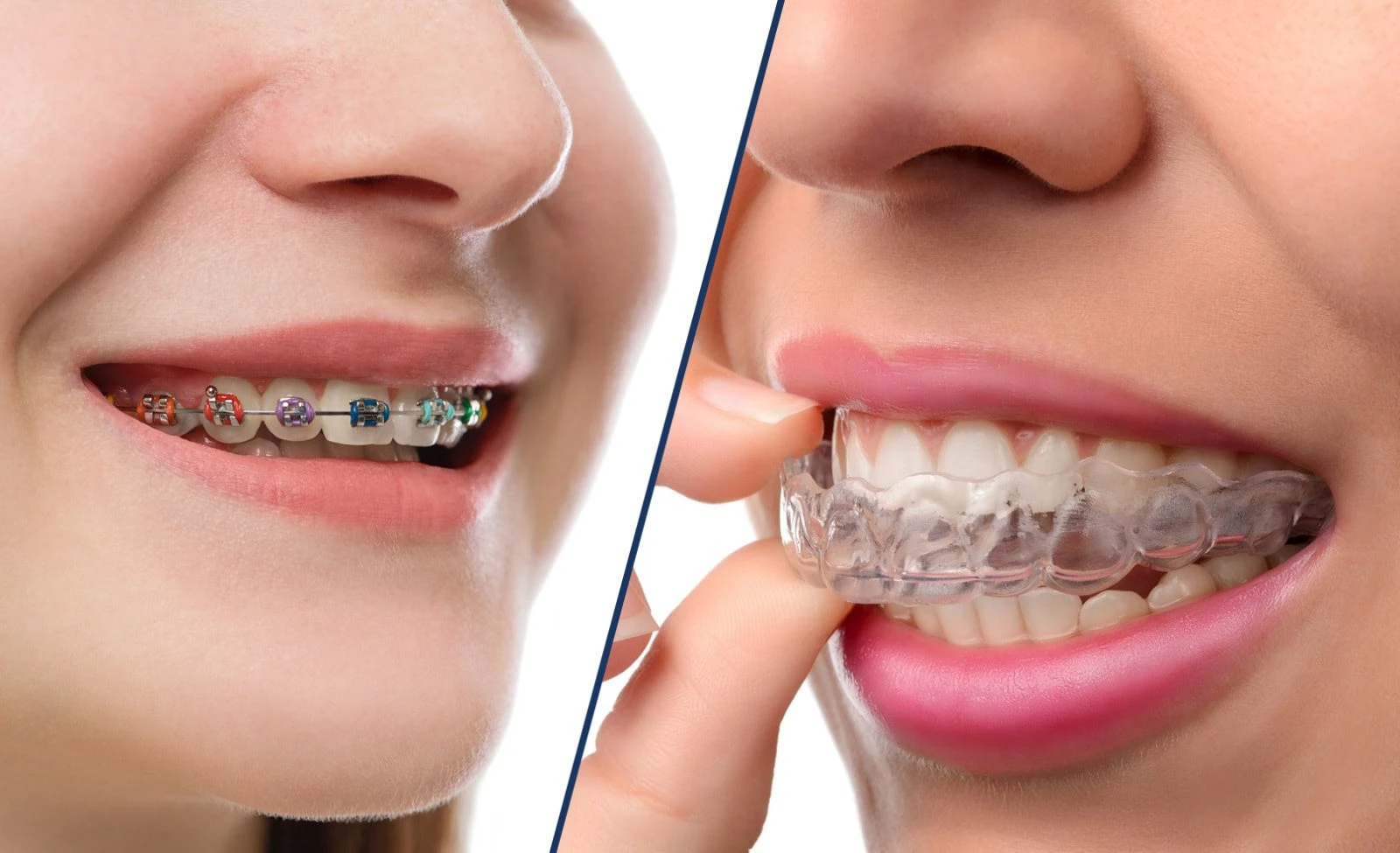
The Great Debate: Traditional Metal Braces vs. Invisible Aligners
Metal braces with brackets and wires were the only type of braces one could go for when orthodontics was considered. Now, though, invisible aligners have become a more attractive choice.
Traditional braces are definitely a very good method for correcting complex problems with one’s teeth. But, the problem is that there is a higher demand for invisible braces due to their comfort and beauty.
In Sri Lanka, you can find both of them easily, but choosing the right type will depend on your oral health, preferences, and needs.
How Traditional Braces Work: The Time-Tested Method
Conventional orthodontic braces. The dentist gradually realigns the teeth by adjusting these wires regularly.
The method involves gradually applying regulated orthodontic force on the teeth. The teeth progressively shift into the desired position as the wire is tightened during routine appointments.
Braces work particularly well for treating:
- severe crowding
- complex bite problems
- large rotations of teeth
- significant jaw alignment issues
Braces continuously provide force without depending on patient compliance because they are fixed items.
Pros and Cons of Metal and Ceramic Braces
But even though braces have a high predictability, there are some limitations that can occur.
Advantages of Braces
- Ideal for complex orthodontic cases
- Fixed the appliance that works continuously
- Perfect for severe bite correction
- In some cases, braces might be cheaper than aligners.
Limitations of Braces
- Highly visible on the teeth
- Can irritate the lips and cheeks.
- Require dietary restrictions
- Dental hygiene is harder to maintain
- Increased visits to the emergency room due to broken wires and brackets
As tooth-colored brackets are used, ceramic braces offer a more aesthetic option than regular braces, but compared to aligners, they are highly visible.
The Rise of Clear Aligners in Sri Lanka
A more modern kind of orthodontics, clear aligners have become increasingly popular all around the world.
Clear aligners employ a set of transparent trays to gently realign teeth in place of braces and wires.
Before moving on to the next aligner tray, each one is custom-made using digital treatment planning and worn for about ten to fourteen days.
Adults, professionals, and college students in Sri Lanka who want a covert orthodontic treatment alternative are increasingly selecting clear aligners.
What Makes Invisible Orthodontics Different?
There exist several significant differences between braces and clear aligners.
Unlike braces, aligners are
- Removable
- Transparent
- Digitally planned
Using technology to simulate the process of teeth movement before starting the treatment increases its effectiveness and predictability.
On average, patients use aligners for 20 to 22 hours per day, removing them during meals and cleaning.
Head-to-Head Comparison: Braces vs. Clear Aligners
Patients can choose which type of treatment is suitable for their way of life by understanding the difference between the two.
1
Appearance and Looks: Being Obvious vs. Being Discreet
One of the main differences between these two appliances is how they look.
Wires and brackets attached to the teeth make conventional braces noticeable. Even if the braces are ceramic, they can still be quite noticeable.
On the other hand, the clear aligners are hardly visible at all when in use. It is unlikely that people will notice aligners during conversation.
This is often one of the key factors that makes aligners popular among adults and professionals.
2
Comfort and Everyday Living: Smooth Resin Versus Wires
As braces consist of wires that can irritate the lips and cheeks, sometimes they can be irritating for the patient.
As clear aligners consist of smooth resin material, which is a type of medical plastic, they cause little irritation.
If you wear a new tray, you may have to feel pressure; however, this discomfort lasts only a few days.
Besides this, clear aligners provide better convenience in terms of everyday life since they are removable.
3
Oral Hygiene and Diet: What Can You Eat?
Conventional braces often lead to dietary restrictions.
Those foods which could possibly damage the brackets or the wires have to be refrained from, such as:
- hard candies
- popcorn
- nuts
- sticky candies
Prior to eating, those individuals wearing invisible aligners just need to remove the trays. It means that there are no considerable dietary restrictions.
Besides, due to the absence of the need for brushing and flossing around the brackets, oral hygiene becomes easier with aligners.
4
Treatment Time and Clinic Visits: Saving Time with Digital Planning
The duration of treatment depends on how complex the orthodontic problem is.
Regular appointments will be needed for conventional braces; it’s usually done once every four to six weeks.
With clear aligners, fewer adjustments will be made because they’re digitally designed. Some appointments are purely for monitoring progress.
Depending on individual cases, most clear aligner therapies are completed in 6 to 18 months.
Cost Comparison: Are Aligners More Expensive Than Braces?
In Sri Lanka, orthodontic treatment costs vary depending on complexity and treatment method.
Typical price ranges include:
| Treatment Type | Typical Cost Range (Sri Lanka) |
|---|---|
| Metal Braces | LKR 120,000 – 250,000 |
| Ceramic Braces | LKR 180,000 – 300,000 |
| Clear Aligners | LKR 100,000 – 500,000 |
Clear aligners may appear more expensive in some cases due to the advanced technology used in treatment planning.
However, the lifestyle advantages of aligners—such as comfort, aesthetics, and convenience—often make them a preferred choice for adult patients.
Why Choose Cayo Dental in Kandy for Your Smile Makeover?
As important as the choice of proper orthodontic treatment method is the choice of a proper facility.
Modern orthodontic planning and dental technologies are united in clear aligner treatment at Cayo Dental Hospital.
AI Technology and 3D Intraoral Scanning for Accurate Treatment
The first stage of modern aligner treatment is the 3D intraoral scanning which provides an extremely accurate 3D image of the patient’s teeth.
With the help of advanced orthodontic software and AI planning technology, this digital model allows doctors to develop a treatment plan.
The Advantage of Distance Centers: Remote Scanning for Maximum Convenience
Through remote scanning facilities, patients are able to do initial scans near their location, thus increasing convenience.
With the help of such an approach, citizens of Sri Lanka are now able to access modern orthodontic care.
Simple Online Booking and PayHere Payment System
Booking a consultation is now easier with online appointments and digital payments. The right treatment depends on your dental condition, lifestyle, budget, and commitment to wearing aligners. Clear aligners are ideal for many mild to moderate cases, while braces may be a better option for more complex problems. A consultation with an orthodontist is the best way to determine the most suitable treatment for your smile.
Frequently Asked Questions
Could I opt for invisible aligners rather than the traditional metal braces?
A patient might move from using braces to aligners during their treatment. This depends on the orthodontic objectives and phase of treatment. This should be evaluated by the dentist/orthodontist.
Which method of tooth straightening is quicker?
The length of treatment varies according to the complexity of the case. While sophisticated bite issues may require more time to address with braces, mild orthodontic issues may be resolved rather quickly with aligners. When correctly designed, both treatments can produce outstanding outcomes.
If I have a severe overbite, am I a good candidate for clear aligners?
Many biting issues, including mild overbites, can be fixed using clear aligners. However, a combination of orthodontic treatments or conventional braces may be necessary for significant bite adjustments. To choose the best course of action, a thorough orthodontic evaluation is necessary.
Clinical Data from Cayo Dental
Clinical observations from Cayo Dental Hospital demonstrate predictable outcomes for clear aligner treatment when cases are properly selected.
| Clinical Indicator | Observed Value |
|---|---|
| Aligner cases analysed | ~642 patients |
| Average patient age | ~29.8 years |
| Average aligners per arch | ~22 trays |
| Average total aligners per patient | ~38 trays |
| Average treatment duration | ~10.6 months |
| Cases requiring refinement aligners | ~54% |
| Treatment completion rate | ~93% |
These findings align with international orthodontic research showing that clear aligners are highly effective for mild to moderate orthodontic corrections when patients maintain proper wear compliance.